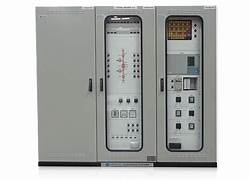
SUBSTATION AUTOMATION
At Mashel Electric, we specialize in cutting-edge substation automation solutions that revolutionize power grid management. Our comprehensive automation systems enable utilities and industrial facilities to monitor, control, and optimize their electrical infrastructure with unprecedented precision and efficiency. By integrating advanced SCADA systems, intelligent electronic devices, and robust communication networks, we deliver solutions that enhance grid reliability, reduce operational costs, and enable seamless integration of renewable energy sources.
Whether it's upgrading legacy substations with modern automation capabilities, implementing advanced protection schemes, or developing comprehensive control centers, our team of experts has the technical expertise to deliver customized solutions. We work closely with our clients to design substation automation systems that meet their specific operational requirements, regulatory compliance needs, and budget constraints. Trust Mashel Electric to transform your power infrastructure with state-of-the-art automation technology that delivers reliability, efficiency, and future-proof performance.
FUNCTIONALITY
Mashel Electric's substation automation systems serve as the intelligent backbone of modern power distribution networks. Equipped with advanced IEDs (Intelligent Electronic Devices), RTUs (Remote Terminal Units), and HMIs (Human-Machine Interfaces), our systems continuously monitor critical parameters including voltage, current, frequency, and power factor across the entire substation. Upon detecting anomalies or fault conditions, the system automatically executes pre-programmed response protocols, isolates affected sections, and reroutes power to maintain service continuity. Our solutions enable remote operation of circuit breakers, load tap changers, and other substation equipment, while providing real-time data visualization and historical analysis for optimal grid management.
Technical Specifications
| Parameter | Specification |
|---|---|
| Voltage Ratings | 11kV to 765kV (Medium to Extra High Voltage) |
| Communication Protocols | IEC 61850, DNP3, Modbus, IEC 60870-5-103/104, OPC UA |
| Control System | Distributed architecture with redundant SCADA servers |
| Response Time | Less than 100ms for critical protection functions |
| Protection Level | IP54 (control rooms), IP65 (outdoor equipment) |
| Equipment Brands | Siemens, Schneider, ABB, GE, SEL, Toshiba, Mitsubishi |
| Network Infrastructure | Fiber optic, Ethernet, WiMAX, LTE, and secure wireless options |
| Cybersecurity | IEC 62351 compliance with end-to-end encryption |
| Redundancy | Dual power supplies, redundant communication paths, hot-standby servers |
| Additional Features | AI-based fault prediction, digital twin integration, cloud connectivity |
Benefits
- Enhanced Grid Reliability: Minimizes outage duration through rapid fault detection, isolation, and service restoration, improving overall system reliability metrics.
- Operational Efficiency: Reduces manual intervention requirements and optimizes load distribution, resulting in significant operational cost savings.
- Improved Safety: Enhances personnel safety by enabling remote operation of high-voltage equipment and providing advanced arc flash protection.
- Asset Optimization: Extends equipment lifespan through condition-based monitoring and predictive maintenance, maximizing return on infrastructure investments.
- Scalability and Future-Proofing: Modular architecture allows for gradual expansion and technology upgrades without complete system replacement.
- Renewable Integration: Seamlessly integrates distributed energy resources, enabling higher penetration of solar, wind, and other renewable sources.
- Regulatory Compliance: Ensures adherence to evolving grid codes, reliability standards, and cybersecurity requirements across the power sector.
Applications
- Transmission Substations: Enables monitoring and control of high-voltage transmission infrastructure, facilitating bulk power transfer across regions.
- Distribution Substations: Optimizes medium-voltage distribution networks, improving service reliability for urban and rural consumers.
- Renewable Energy Plants: Manages power flow from solar farms, wind parks, and hybrid renewable installations with grid synchronization.
- Industrial Facilities: Provides comprehensive power management for manufacturing plants, refineries, and large commercial complexes.
- Data Centers: Ensures ultra-reliable power delivery with redundant protection schemes for critical IT infrastructure.
- Railway Electrification: Controls traction power substations, ensuring reliable operation of electric rail networks.
- Microgrids: Enables intelligent control of localized power systems with multiple distributed energy sources and storage.
- Smart Grid Initiatives: Forms the foundation of advanced distribution management systems for next-generation utility operations.
Manufacturing Excellence
- Precision Engineering: Utilizes advanced CAD/CAM systems and 3D modeling for accurate design of control panels and equipment.
- Component Sourcing: Partners with leading global manufacturers for high-quality relays, controllers, and communication devices.
- System Integration: Employs specialized engineers for seamless integration of diverse equipment and protocols.
- Testing Facilities: Features comprehensive testing infrastructure including protocol analyzers and network simulators.
- Custom Solutions: Develops tailored automation architectures to meet specific utility requirements and constraints.
Quality Assurance
- Factory Acceptance Testing: Comprehensive system testing prior to deployment to verify functionality and performance.
- Protocol Compliance: Verification of IEC 61850 and other protocol implementations for interoperability.
- Cybersecurity Validation: Rigorous testing of security measures against industry standards and potential threats.
- Site Acceptance Testing: On-site verification of system performance under actual operating conditions.
- Performance Benchmarking: Measurement of system response times and reliability metrics against specifications.
Key Features
IEC 61850 Implementation
Full compliance with the international standard for substation communication, ensuring interoperability between equipment from different manufacturers.
Advanced Protection Schemes
Implements sophisticated protection algorithms including distance, differential, and directional protection with adaptive settings based on system conditions.
Real-time Monitoring
Provides comprehensive visualization of substation parameters with customizable dashboards, historical trending, and predictive analytics.
Cybersecurity Framework
Implements defense-in-depth security architecture with network segmentation, access control, encryption, and continuous monitoring.
Cloud Connectivity
Enables secure remote access to substation data and controls through cloud-based platforms with enterprise-grade security.
AI-Powered Analytics
Leverages machine learning algorithms for fault prediction, load forecasting, and asset health assessment.
Seamless Integration
Compatible with existing legacy systems through protocol gateways, enabling gradual migration to modern automation.
DER Integration
Manages distributed energy resources including solar, wind, and energy storage with advanced grid stabilization functions.
Digital Twin Technology
Creates virtual replicas of physical substations for simulation, testing, and optimization without disrupting operations.
Time Synchronization
Implements IEEE 1588 Precision Time Protocol for microsecond-level synchronization across all substation devices.
Power Quality Management
Monitors and mitigates power quality issues including harmonics, voltage sags, swells, and flicker.
Mobile Operations
Provides secure mobile access for field personnel with role-based permissions and offline capabilities.
Why Choose Mashel Electric
Mashel Electric is a pioneering force in substation automation, delivering innovative solutions that transform power grid operations worldwide.
Technical Expertise
Our team of power system engineers and automation specialists brings decades of experience in designing and implementing complex substation automation projects.
Industry Certifications
Our solutions comply with international standards including IEC 61850, IEEE, and local regulatory requirements for substation automation.
End-to-End Solutions
From initial consulting and system design to implementation, testing, and ongoing support, we provide comprehensive services throughout the project lifecycle.
Global Experience
With successful implementations across diverse geographical regions and utility environments, we bring proven solutions to every project.
Knowledge Transfer
We provide comprehensive training programs for operations and maintenance staff, ensuring effective utilization of automation systems.
Innovation Focus
Our dedicated R&D team continuously explores emerging technologies to keep our solutions at the forefront of substation automation.
Frequently Asked Questions
Substation automation is the use of intelligent electronic devices, communication networks, and control systems to monitor and control electrical substations remotely. It's crucial for enhancing grid reliability, reducing operational costs, improving safety, and enabling the integration of renewable energy sources into the power grid.
IEC 61850 is the international standard for substation communication that ensures interoperability between devices from different manufacturers. It reduces wiring requirements, enables faster protection and control functions, simplifies engineering and configuration, and provides a scalable architecture for future expansion.
Our substation automation solutions implement a defense-in-depth security approach following IEC 62351 standards. This includes network segmentation, firewalls, access control, encryption, authentication mechanisms, and continuous monitoring. We regularly update security protocols to address emerging threats and ensure the integrity of critical infrastructure.
Yes, our solutions are designed with backward compatibility in mind. We use protocol gateways and interface devices to seamlessly integrate modern automation systems with existing legacy equipment, allowing for gradual migration and minimizing disruption to operations.
The ROI for substation automation varies based on the specific implementation, but utilities typically see returns within 3-5 years through reduced operational costs, minimized outage durations, optimized asset utilization, and decreased maintenance requirements. Additional long-term benefits include enhanced grid reliability and improved customer satisfaction.