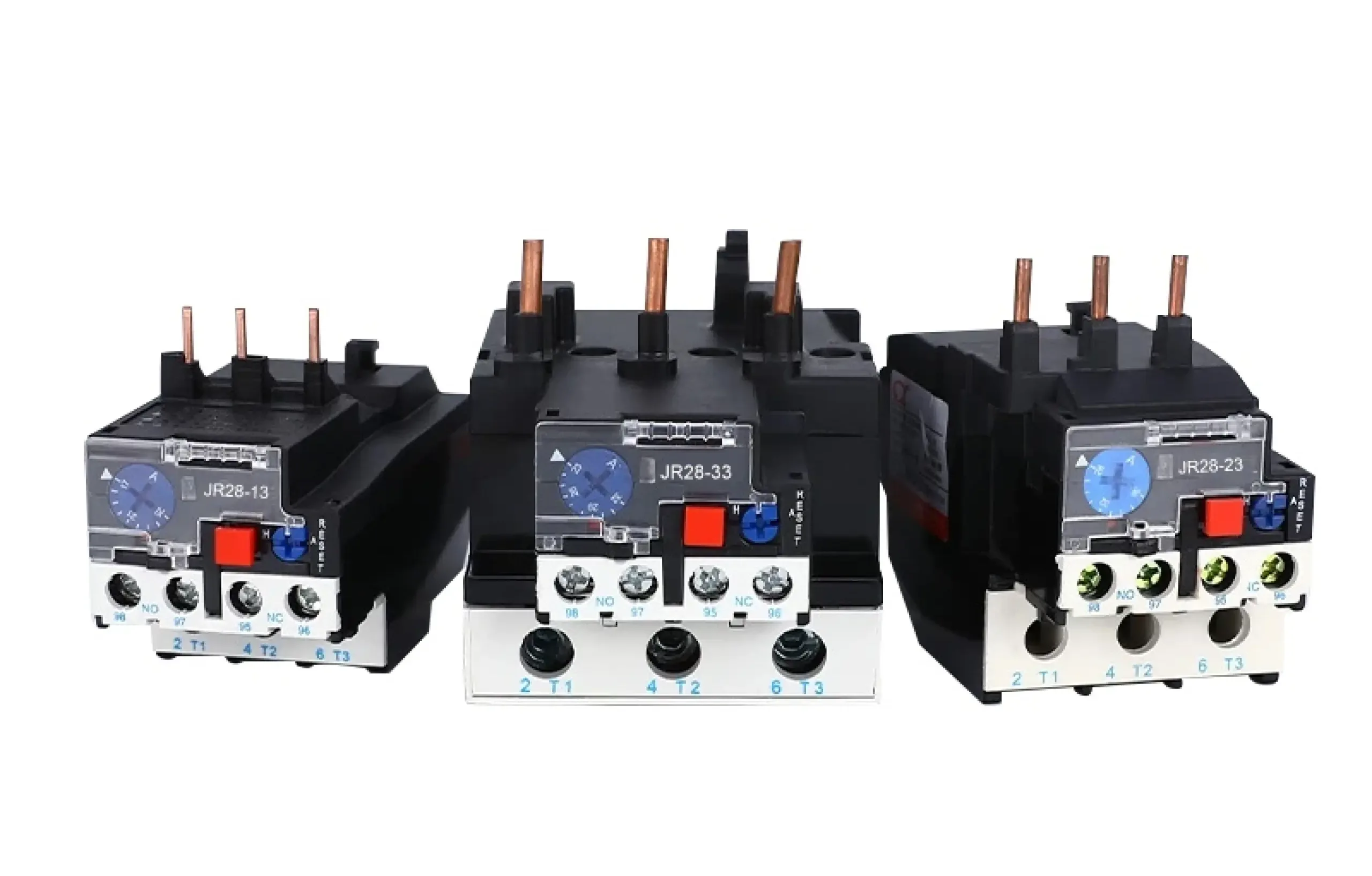
EM RELAYS
At Mashel Electric, we specialize in supplying high-performance Electromechanical (EM) Relays designed for critical control and power switching applications. Our extensive range of relays caters to the diverse needs of industrial automation, power distribution, and infrastructure projects. We provide solutions that ensure electrical isolation, signal integrity, and reliable switching, helping our clients maintain operational efficiency and safety across their systems.
Whether you require general-purpose relays for control panels or heavy-duty variants for high-load switching, our portfolio covers all bases. We partner with leading global manufacturers to deliver products that offer superior mechanical life and electrical endurance. Our technical team assists clients in selecting the right relay specifications—including contact configuration, coil voltage, and mounting type—to ensure seamless integration into existing setups. Trust us for components that power your control logic with precision.
FUNCTIONALITY
Electromechanical Relays operate on the principle of electromagnetic induction. When an electrical current flows through the relay's coil, it generates a magnetic field that attracts an armature, mechanically moving the contact points. This action either closes or opens the connected circuit, effectively allowing a low-power signal to control a high-power circuit. Upon interruption of the coil current, the magnetic field collapses, and a spring mechanism returns the contacts to their original state. This physical separation provides excellent electrical isolation between the control circuit and the load circuit, ensuring safety and preventing feedback.
Technical Specifications
| Parameter | Specification |
|---|---|
| Coil Voltage Ratings | 12V, 24V, 48V, 110V, 230V (AC/DC Options Available) |
| Contact Configuration | SPST, SPDT, DPDT, 3PDT, 4PDT |
| Contact Ratings | Up to 10A @ 250V AC / 30V DC (Resistive Load) |
| Operate Time | Typically < 20ms |
| Release Time | Typically < 10ms |
| Insulation Resistance | > 1000 MΩ at 500V DC |
| Dielectric Strength | 2000V AC (Coil to Contact), 1000V AC (Between Contacts) |
| Mechanical Life | > 10 Million Operations (minimum) |
| Contact Material | Silver Nickel (AgNi), Silver Cadmium Oxide (AgCdO) |
| Mounting Type | DIN Rail Mount, Panel Mount, Plug-in Socket |
| Ambient Temperature | -25°C to +55°C (Operating Range) |
Benefits
- Galvanic Isolation: Provides a distinct physical separation between the control circuit and the load circuit, protecting sensitive logic controllers from high-voltage transients and faults.
- High Load Switching: Capable of switching higher currents and voltages compared to solid-state counterparts of similar size, making them ideal for motors, heaters, and lighting loads.
- Cost-Effectiveness: Offers a reliable switching solution at a competitive price point, reducing overall project costs without compromising performance.
- Robustness and Durability: Designed to withstand electrical noise, temperature fluctuations, and mechanical vibrations, ensuring long operational life in harsh industrial environments.
- Simple Diagnostics: Visual inspection of the contact state and mechanical "click" sound facilitate easy troubleshooting and status verification during maintenance.
- Wide Application Range: Versatile configurations (SPDT, DPDT, etc.) allow a single relay type to serve multiple functions within complex control circuits.
- Low Contact Resistance: Ensures minimal voltage drop and heat generation across the contacts, promoting energy efficiency in continuous duty applications.
Applications
- Industrial Automation Panels: Used for interfacing PLC outputs with field devices like contactors, solenoid valves, and actuators.
- Motor Control Centers (MCC): Essential for control logic in star-delta starters, reversing starters, and soft starter circuits.
- Power Distribution Systems: Utilized in protection schemes, trip circuits, and alarm annunciation systems in switchgear panels.
- Lighting Control: Switches high-intensity discharge lamps, street lighting, and commercial building lighting circuits via timer or sensor inputs.
- Renewable Energy Systems: Controls isolation and safety mechanisms within solar inverters and wind turbine control units.
- Railway Signaling: Performs critical safety logic and track switching operations where reliability and isolation are paramount.
- HVAC Systems: Controls compressors, fans, and heating elements in heating, ventilation, and air conditioning units.
- UPS and Generator Control: Monitors mains status and initiates automatic transfer switches (ATS) in backup power systems.
Manufacturing Excellence
- Precision Winding: Coils are wound with high-purity copper wire using automated machines to ensure consistent resistance and magnetic properties.
- Advanced Contact Materials: Contacts are fabricated using Silver Nickel (AgNi) or Silver Cadmium Oxide (AgCdO) to resist welding and arc erosion.
- Rugged Housing: Enclosures are made from high-grade, flame-retardant thermoplastics that provide excellent insulation and mechanical protection.
- Quality Magnets: High-permeability magnetic cores are used to ensure fast actuation and reliable holding force with minimal power consumption.
- In-Line Testing: Every unit undergoes rigorous testing for coil integrity, contact resistance, and mechanical operation before dispatch.
Quality Assurance
- Coil Resistance Test: Verifies the integrity of the winding to ensure correct power consumption and magnetic generation.
- Pick-up and Drop-out Voltage Test: Confirms the relay operates strictly within specified voltage thresholds to prevent erratic behavior.
- Contact Resistance Measurement: Ensures low millivolt drop across closed contacts for efficient power transfer.
- Dielectric Withstand Test: High voltage test between coil and contacts to guarantee safe isolation levels.
- Mechanical Endurance Test: Validates the operational life of the relay under standard switching cycles without electrical load.
Key Features
Electromagnetic Switching
Utilizes a magnetic coil to mechanically operate contacts, providing reliable physical isolation between control and load circuits.
Multiple Contact Configurations
Available in SPST, SPDT, DPDT, and 4PDT configurations to accommodate complex logic circuits and multiple load switching needs.
High Insulation Resistance
Offers superior dielectric strength between coil and contacts, protecting sensitive control systems from high-voltage transients.
AC & DC Coil Options
Designed to operate on various control voltages, with options for both Alternating Current (AC) and Direct Current (DC) control circuits.
Visual Status Indication
Many models feature mechanical flags or LED indicators to visually confirm the relay's operational status (On/Off).
High Inrush Capability
Engineered to withstand high inrush currents typically found in lighting and motor starting applications without contact welding.
Latching Relay Variants
Available in bi-stable latching versions that maintain their state without continuous power, ideal for energy-saving applications.
Extended Mechanical Life
Built with durable spring mechanisms and high-quality materials to ensure tens of millions of reliable switching cycles.
Flame Retardant Housing
Constructed with high-temperature resistant thermoplastics to prevent fire propagation and ensure safety in enclosed panels.
Low Power Consumption
Designed with efficient coil windings to minimize heat generation and energy usage during extended energization periods.
Plug-in and Solder Terminals
Offers flexible termination options, including plug-in sockets for easy replacement and solder terminals for permanent connections.
Arc Suppression
Features optimized contact gaps and materials to quench electrical arcs quickly, protecting contacts from erosion during switching.
Why Choose Mashel Electric
Mashel Electric is your trusted partner for high-quality electromechanical components, offering technical expertise and reliable supply chain solutions.
Technical Expertise
Our team provides expert guidance on relay selection, ensuring the right specifications for coil voltage, contact rating, and duty cycle.
Authentic Components
We stock relays from globally recognized brands like OMRON, Schneider, ABB, and Siemens, guaranteeing genuine quality.
Application Support
Beyond supply, we offer technical support for circuit integration and troubleshooting to ensure your systems run smoothly.
RoHS Compliance
We prioritize environmentally friendly components, supplying relays that meet RoHS and other international safety standards.
Standardized Dimensions
Our relays conform to industry-standard footprints (DIN rail widths), ensuring easy retrofitting and panel space optimization.
Reliable Supply Chain
With a robust inventory management system, we ensure timely delivery and availability of critical spares for your projects.
Frequently Asked Questions
While both operate on the same electromagnetic principle, EM Relays are generally designed for lower power switching and control logic applications, whereas Contactors are built to switch high-power loads like motors and capacitors. Contactors also typically feature arc chutes and spring-loaded contacts for handling high inrush currents.
No, you cannot interchange AC and DC coils directly. A DC coil on an AC supply will chatter and fail to operate correctly due to the alternating zero crossings. Conversely, an AC coil on a DC supply may overheat and burn out due to lack of impedance variation. Always match the coil voltage type to the supply.
SPDT stands for Single Pole Double Throw, meaning the relay has one common contact that can connect to one of two other contacts (Normally Open or Normally Closed). DPDT stands for Double Pole Double Throw, meaning it has two separate sets of contacts controlled by a single coil, allowing you to switch two circuits simultaneously.
AC relays naturally hum slightly due to the alternating magnetic field, but excessive buzzing usually indicates dirt on the armature face, low voltage, or a broken shading coil (a copper ring on the core). This should be inspected and rectified to prevent coil burnout.
Generally, EM Relays are maintenance-free for their rated lifespan. However, in high-cycle applications, contacts may wear out. It is advisable to periodically check for loose socket connections and, in accessible models, inspect contacts for carbon buildup or pitting.